Explained
Beginner Electric Guitars, Explained
After reading, you'll understand scale length, radius, pickup layouts and bridges well enough to read any beginner guitar spec sheet.
In this guide
First-time buyers are often told to pick on looks, then find that the neck feels wrong or the pickups do not suit the music. Spec sheets use jargon such as radius, nut width and coil split without explaining it. Most beginner guitars share similar basics, so a few details make the real difference. This guide covers those details.
The 30-second version
- Scale length sets string tension, and 25.5 in is the common standard for beginner guitars.
- Neck shape matters more than looks, so check nut width, thickness and radius.
- HSS and HSH pickups keep options open, because they offer both humbucker and single-coil sounds.
- A fixed bridge is simpler, while a tremolo adds options and needs more care.
- Check the box contents, because a gig bag is often not included.
The products this guide is about
Our verdict on each, with the full reasoning on the companion review.
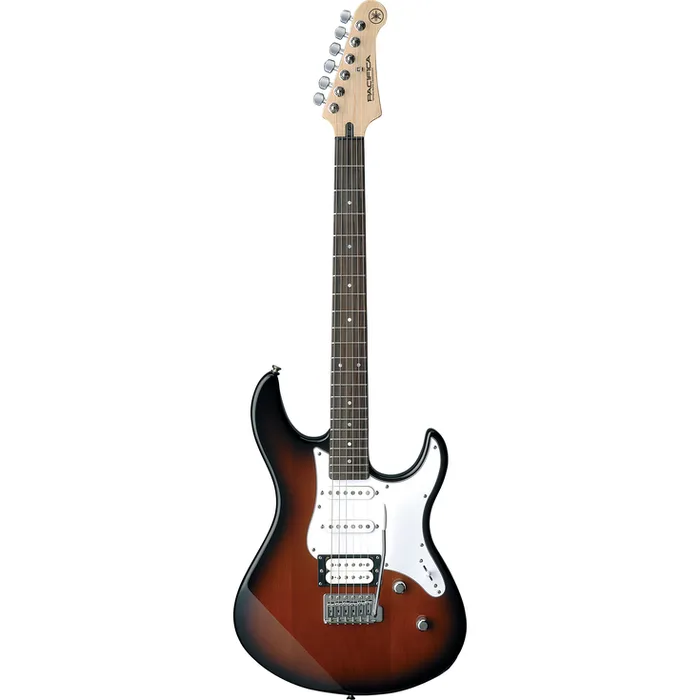
- Buy Yamaha Pacifica 112V The Pacifica 112V pairs a slim, standard-scale neck with a humbucker, two single coils and a coil split, so one guitar covers most beginner styles. Amazon
- Buy Harley Benton ST-20 CA A Strat-shaped starter from Thomann's house brand with standard dimensions, three single coils and a lowest-tier price.
- Buy Sterling by Music Man Intro Series Cutlass CT20HSS A compact double-cut with ceramic HSS pickups, a 12 in radius and a maple board, from the Music Man family's beginner line. Amazon
- Buy Ibanez Gio GRX70QA A slim-neck HSH guitar with a quilted art-grain top and a tremolo with six independent saddles at an entry price. Amazon
- It depends Epiphone Les Paul Special Double Cut A slab-mahogany double-cut with two P-90 PRO pickups, a SlimTaper neck and a gig bag in the box. Amazon
- Skip Jackson JS Series Dinky Arch Top JS22 DKA A hot-rodded metal shape with two high-output ceramic humbuckers and a three-way switch, narrow in what it does for a first guitar.
What actually matters
- Scale length - The distance from nut to bridge. A longer scale feels tighter and a shorter one feels slacker.
- Nut width - Width of the neck at the top. About 42 mm is common and comfortable for most hands.
- Neck thickness - How deep the neck is. Thin necks feel fast and thicker ones feel more substantial.
- Fretboard radius - The curve across the fingerboard. Flatter boards ease bending and rounder ones suit chords.
- Pickups - They convert string vibration to signal. Layout and type shape the tone more than almost anything else.
- Bridge - Tremolo bridges allow vibrato and dive effects. Fixed bridges hold tuning more easily.
- Included accessories - Gig bag, cable and strap are not always included, so check the spec page.
The specs, in plain English
Green flags vs red flags
Green flags
- The maker publishes scale length, nut width and radius.
- A 25.5 in scale with a roughly 42 mm nut.
- A pickup layout that fits your music.
- A clear statement of what is in the box.
- A warranty stated on the product page.
Red flags
- No dimensions on the spec page.
- Pickups described only with marketing adjectives.
- A listing whose text and spec table disagree.
- Only one pickup type for a first guitar when you do not know your style.
- An accessory bundle with no named contents.
Who's who: the brands
- Yamaha - Known for the Pacifica line and thorough spec sheets.
- Ibanez - Known for slim-neck rock guitars, with the Gio line as its entry tier.
- Epiphone - Gibson's more accessible line, covering Les Paul and SG styles.
- Sterling by Music Man - Music Man's more accessible line, with a Cutlass beginner series.
- Harley Benton - Thomann's house brand, built around low-tier prices.
How to read a listing without getting fooled
Start with scale length, nut width and radius, because they decide feel. Next read the pickup line from bridge to neck and the bridge type. Then look for the included accessories, such as a gig bag, and for warranty details. If a number is missing, treat that as an unknown rather than assuming it matches a similar model. When listing text and the spec table disagree, trust the table or ask the seller.
How much should you spend?
Beginner electrics fall into a budget tier and a mid-range tier. Budget guitars such as the Harley Benton and Ibanez give you standard dimensions and basic hardware. Mid-range models such as the Yamaha, Sterling and Epiphone typically add better pickup options, a gig bag or more detailed specs. Whatever the tier, leave room in the budget for an amp, a cable, a tuner and a basic setup.
Questions, answered
Can an adult learn on a guitar sold for beginners?
Yes. Beginner guitars share the same standard dimensions as many higher-tier models, so skills transfer. The Harley Benton's page even says its dimensions match standard Strat-style guitars. You can upgrade later without relearning anything.
Should I buy a starter pack with an amp?
Packs are convenient but you cannot always see the exact contents and specs. It is often better to pick a guitar and amp separately. Our best guitar amps review covers practice amps that work with all of these.
Do left-handed versions exist?
Some makers list left-handed versions of their models, such as Yamaha's PAC112JL in the Pacifica line. Availability varies by model, so check each maker's page.
How often do I need to change strings?
There is no fixed schedule. Change them when they sound dull, feel rough or will not hold tune. A lighter set such as .009 to .042, which several of these guitars list, is a good starting point.
Or jump to the head-to-head: Yamaha Pacifica 112V vs Harley Benton ST-20 CA.