

Outdoors & Fitness
The Best Solar Chargers: 4 Compared (and One to Skip)
Every one of these four publishes a number lower than the one on the box. The gap between rated watts and what you actually get is the specification nobody reads.
The short version
The BigBlue SolarPowa P25 is the pick for charging phones and power banks, and it is the only panel here that publishes both numbers side by side: 25 watts rated and 20 watts working, from a 0.46 kilogram pack with USB-A and USB-C and an IP68 rating. The BLUETTI SP100L is the one to buy for a power station, at 100 watts maximum with BLUETTI stating it produces up to 90 watts in ideal conditions, using 23.4 percent monocrystalline cells behind ETFE and a standard MC4 connector, at 4.95 kilograms. The ALLPOWERS SolaX SE100 suits the same job with a quoted 100 watts plus or minus 5 percent and 23 to 25 percent efficiency, though its figures come as ranges rather than points. Skip the Goal Zero Nomad 10 for most people: it is rated at 10 watts but its USB port tops out at 7.5 watts, which is a 25 percent haircut before sunlight is even involved, for 0.51 kilograms. Best for: reading the second number on the page rather than the first.
Our picks at a glance
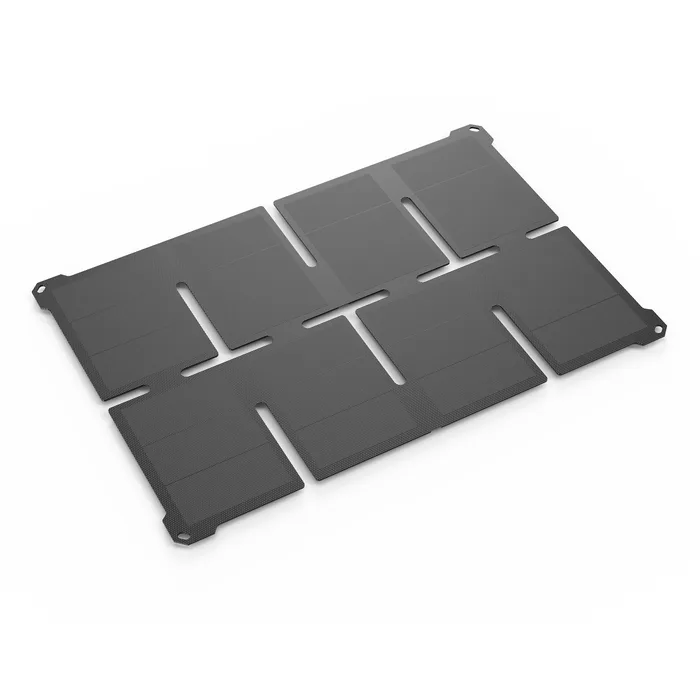
- BigBlue SolarPowa P25 - Buy. The only panel here that prints a rated power and a working power next to each other, at under half a kilogram with two USB ports.
- BLUETTI SP100L Solar Panel - Buy. A hundred watt panel whose own page tells you to expect ninety, with a standard MC4 connector so it is not locked to one brand of battery.
- ALLPOWERS SolaX SE100 - It depends. The same hundred watt job as the BLUETTI, with its headline numbers expressed as ranges and a laminated integrated build.
- Goal Zero Nomad 10 - Skip. Rated at ten watts with a USB port that maxes out at 7.5, which is a quarter of the panel gone before the sun has a say.
The verdict in 30 seconds
What mattered most
- Headline rating
- The maker's own lower figure
- Output type
- Stated weight
- Cell type and efficiency
- Folded size
A solar panel's headline number is what it produces in a laboratory, pointed straight at a calibrated light source, at a controlled temperature. Every maker knows the real figure is lower, and the interesting thing about this category is that most of them say so, in small print, in four different ways. One quotes a working power alongside the rated one. One says its 100 watt panel makes up to 90 watts in ideal conditions. One puts a tolerance band on the output. And one rates the panel at 10 watts while the port you plug into is capped well below that. We compared four on the derate rather than the headline.
The only panel here that prints a rated power and a working power next to each other, at under half a kilogram with two USB ports.
Best for: Hikers and campers charging phones, power banks and headlamps who want the real output figure before they buy.
- BigBlue states rated power of 25W and working power of 20W in total, which is the honest number and almost nobody publishes it.
- Two outputs, USB-A at 5V 2.4A and USB-C at 5V 2.4A, with a stated combined maximum of 5V 4A.
- 0.46 kilograms, or 1.01 pounds, which is the lightest panel in this comparison.
- Back-contact monocrystalline cells and an IP68 weather rating.
- Folds to 118 by 163 by 35mm from an unfolded 460 by 326 by 5mm, so it clips to a pack without taking real space.
- 5V output only, so it charges phones, power banks and headlamps but will not feed a power station directly.
- 20 watts of working power is a slow charge for anything with a large battery.
- The 4A combined limit means two devices share the output rather than each getting its own.
- An 8-fold design has more hinges to wear than a two-panel layout.

A hundred watt panel whose own page tells you to expect ninety, with a standard MC4 connector so it is not locked to one brand of battery.
Best for: Anyone charging a portable power station at a campsite, in a van, or as backup at home.
- BLUETTI states a maximum power of 100W and says plainly that under ideal conditions the panel can produce up to 90W.
- Monocrystalline silicon cells with a stated efficiency of up to 23.4 percent, behind an ETFE lamination.
- Standard MC4 connector, so it works with most solar generators rather than only BLUETTI's own.
- Full dimensions published: 595 by 1132mm unfolded, 595 by 564.5 by 55mm folded, at 4.95 kilograms.
- Operating temperature range stated at 14 to 149 degrees Fahrenheit.
- Nearly 5 kilograms, so this is a car, van or basecamp panel rather than something you carry far.
- No USB output, so it needs a power station or a charge controller to be useful.
- Folded it is still 595mm on the long edge, which is awkward in a small boot.
- ETFE lamination is durable but the surface dulls with UV exposure over years.

The same hundred watt job as the BLUETTI, with its headline numbers expressed as ranges and a laminated integrated build.
Best for: Power station owners who want a slim, weather-resistant panel and are comfortable planning around the low end of a range.
- Maximum output stated at 100W plus or minus 5 percent, which is a tolerance band rather than a single optimistic figure.
- Full electrical specification published: open circuit voltage 24.48V, maximum output voltage 20.8V, short circuit current 5.33A.
- ETFE surface with a stated 23 to 25 percent efficiency.
- IP68 rating, described as water, dust and shock resistant, in a slim laminated construction.
- Efficiency and output both quoted as ranges, so the pessimistic end is what you should plan around.
- No weight published in the product data, which makes it hard to compare against the BLUETTI's 4.95 kilograms.
- Needs the right cable for your power station, since panel and battery connectors vary.
- A laminated integrated panel is harder to repair than a framed one if a cell is damaged.
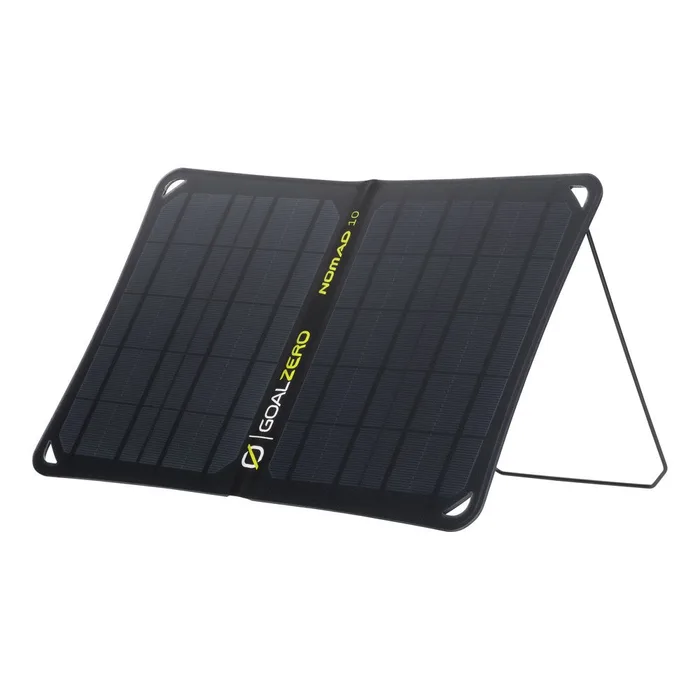
Rated at ten watts with a USB port that maxes out at 7.5, which is a quarter of the panel gone before the sun has a say.
Best for: Topping up a headlamp, a GPS or a small power bank on a multi-day trip where any charge is better than none.
- Goal Zero publishes the full specification: 10W rated power, open circuit voltage of 6 to 7V, monocrystalline cells.
- Built-in kickstand that clicks into multiple angles, plus a dock for the matching power bank.
- 1.12 pounds with dimensions published folded and unfolded, and a two year warranty.
- Genuinely rugged and easy to strap to a pack or a tent.
- The integrated USB port is stated at 5V up to 1.5A, a 7.5W maximum, against a 10W panel rating.
- 0.51 kilograms for 7.5 watts at the port is the worst weight-to-output ratio in this comparison.
- A single USB-A output, with no USB-C.
- At this output it is a trickle charger, and charging a modern phone from flat will take most of a sunny day.
| Criteria | SolarPowa P25 | SP100L Solar Panel | SolaX SE100 | Nomad 10 |
|---|---|---|---|---|
| Verdict | Buy it | Buy it | It depends | Skip it |
| Best for | Hikers and campers charging phones, power banks and headlamps who want the real output figure before they buy. | Anyone charging a portable power station at a campsite, in a van, or as backup at home. | Power station owners who want a slim, weather-resistant panel and are comfortable planning around the low end of a range. | Topping up a headlamp, a GPS or a small power bank on a multi-day trip where any charge is better than none. |
| Price tier | $$ · mid-range | $$$ · premium | $$$ · premium | $$ · mid-range |
| Headline rating | 25W rated | 100W maximum | 100W plus or minus 5 percent | 10W rated |
| The maker's own lower figure | 20W working power | Up to 90W in ideal conditions | 95W at the bottom of the tolerance band | 7.5W maximum at the USB port |
| Output type | USB-A and USB-C, 5V | MC4 connector for a power station | Connector for a power station | USB-A, 5V up to 1.5A |
| Stated weight | 0.46 kg (1.01 lb) | 4.95 kg (10.9 lb) | Not published | 0.51 kg (1.12 lb) |
| Cell type and efficiency | Back-contact monocrystalline, efficiency not stated | Monocrystalline silicon, up to 23.4 percent | ETFE surface, 23 to 25 percent | Monocrystalline, efficiency not stated |
| Folded size | 118 x 163 x 35mm | 595 x 564.5 x 55mm | Not published | 24.1 x 18.4 x 3.2 cm |
| Weather rating | IP68 | ETFE lamination, no IP rating stated | IP68 | Not published |
| Charges a power station | No, 5V USB only | Yes, via MC4 | Yes | No, 5V USB only |
Which one is right for you?
- Hikers and campers charging phones, power banks and headlamps who want the real output figure before they buy. Buy it BigBlue SolarPowa P25
- Anyone charging a portable power station at a campsite, in a van, or as backup at home. Buy it BLUETTI SP100L Solar Panel
- Power station owners who want a slim, weather-resistant panel and are comfortable planning around the low end of a range. It depends ALLPOWERS SolaX SE100
- Topping up a headlamp, a GPS or a small power bank on a multi-day trip where any charge is better than none. Skip it Goal Zero Nomad 10
How we judged the field
Five things decide a portable solar panel and the headline wattage is the least reliable of them. The first is the derate: the difference between the rated figure and whatever lower number the maker is willing to publish alongside it. The second is the output type, because a 5 volt USB panel and an MC4 panel for a power station are different products that happen to share a category. The third is weight, which is what determines whether the panel travels with you or lives in a vehicle. The fourth is folded size, since a panel that will not fit the space you have is not a panel you will bring. The fifth is weather rating, because these live outdoors by definition and a shower is not an unusual event.
What makes this category unusually readable is that all four of these makers publish a second, lower number, and they do it in four different dialects. BigBlue is the clearest, printing 25 watts rated and 20 watts working in the same table. BLUETTI writes in prose that its 100 watt panel can produce up to 90 watts under ideal conditions. ALLPOWERS puts a plus or minus 5 percent band on its 100 watts. And Goal Zero does it by omission: the panel is rated at 10 watts and the USB port you actually plug into is specified at 5 volts and up to 1.5 amps, which is 7.5 watts. Once you go looking for that second number, the field sorts itself.
BigBlue SolarPowa P25 - buy
The SolarPowa P25 is the panel we would buy for charging things you carry, and the reason is a piece of honesty. BigBlue’s specification table lists rated power at 25W and working power at 20W in total, which is the derate stated as a specification rather than buried in a caveat. That single decision makes it the easiest panel here to plan around. The outputs are a USB-A and a USB-C, each at 5V and 2.4A, with a combined maximum of 5V and 4A, so two devices can share it. It weighs 0.46 kilograms and folds from 460 by 326 by 5mm down to 118 by 163 by 35mm, which is genuinely pocketable in a way the bigger panels are not, and it carries an IP68 rating. The cells are back-contact monocrystalline. The limits are inherent to the format: 5 volts means phones, power banks and headlamps only, 20 working watts is slow for a large battery, and an eight-fold design has a lot of hinges.
BLUETTI SP100L Solar Panel - buy
The SP100L is the one to buy if there is a power station in your setup, and BLUETTI has done something rare in writing down what the panel really does. The page states a maximum power of 100W and then says that under ideal conditions the panel can produce up to 90W, with actual output varying with sunlight, weather, temperature, shading and orientation. That is the derate, in plain English, on the product page. The rest is properly specified: monocrystalline silicon cells at up to 23.4 percent efficiency behind an ETFE lamination, a standard MC4 connector so it is not locked to BLUETTI’s own batteries, 595 by 1132mm unfolded and 595 by 564.5 by 55mm folded, 4.95 kilograms, and an operating range of 14 to 149 degrees Fahrenheit. The costs are size and mass. Five kilograms and a 595mm folded edge make this a vehicle panel, and with no USB output it is useless without a power station or a charge controller.
ALLPOWERS SolaX SE100 - it depends
The SolaX SE100 does the same job as the BLUETTI and describes itself in ranges. ALLPOWERS quotes maximum output as 100W plus or minus 5 percent, which is arguably the most technically honest formulation here since it admits manufacturing variance rather than implying every panel is identical, and it publishes the full electrical picture: 24.48V open circuit, 20.8V maximum output voltage, 5.33A short circuit current. Cell efficiency is given as 23 to 25 percent behind an ETFE surface, and the panel is IP68 rated and built as a slim laminated integrated unit rather than a framed one. The practical difficulty is that ranges are harder to plan with than points, and you should assume the bottom of each. The bigger gap is weight, which does not appear in the product data at all, and on a panel of this class that is the number that decides whether it goes in the car or stays home. A laminated panel is also harder to repair than a framed one.
Goal Zero Nomad 10 - skip
The Nomad 10 is a well-made panel we would steer most people away from, on arithmetic. Goal Zero publishes a rated power of 10W, an open circuit voltage of 6 to 7V and monocrystalline cells, and it publishes the output port honestly too: 5V, up to 1.5A, a 7.5W maximum. Those two numbers sit in the same specification block, and the gap between them is 25 percent gone before a cloud passes. At 0.51 kilograms that works out to the worst weight-to-usable-output ratio in this comparison, roughly fifteen watts per kilogram against the BigBlue’s forty-plus. The build is genuinely good: a kickstand that clicks to multiple angles, a dock for the matching power bank, published folded and unfolded dimensions and a two year warranty. There is one legitimate use for it, which is topping up a headlamp or a GPS over several days where any charge beats none. For charging a phone from flat, it is most of a sunny day.
BigBlue SolarPowa P25 vs BLUETTI SP100L Solar Panel: which should you buy?
The SolarPowa P25 and the SP100L are the two we would actually buy, and they barely compete, which is the useful thing to understand about this category. The BigBlue is a 5 volt USB panel weighing 0.46 kilograms that folds to the size of a paperback and tells you it does 20 working watts. The BLUETTI is a 4.95 kilogram MC4 panel that feeds a power station and tells you it does up to 90. One goes on a pack, the other goes in a boot.
So the decision is made before you compare them: do you own a power station, or are you charging devices directly. If you are charging a phone and a headlamp, the BigBlue is the answer and the BLUETTI is unusable without another 10 kilograms of battery. If you own a power station, the BigBlue’s 5 volt USB output cannot charge it and the BLUETTI’s MC4 connector is exactly what you need, with the added benefit that MC4 is a standard rather than a proprietary plug, so the panel outlives any one battery. Buy both only if you genuinely travel both ways.
What to look for
- Find the second number: every panel here publishes one, whether it is called working power, a tolerance band, an ideal-conditions figure, or the limit on the output port.
- Check the port, not just the panel: the Nomad 10 is rated at 10W and its USB output is specified at 7.5W, which is the figure that reaches your phone.
- Match the output type to what you own: 5V USB charges devices, MC4 charges power stations, and neither substitutes for the other.
- Divide working watts by weight: it is the honest portability figure and it varies more than fourfold across these four.
- Treat efficiency as a size spec: higher efficiency means a smaller panel for the same watts, not more watts.
- Look for an IP rating: these live outdoors, and two of these four publish one while two do not.
Our final take
Solar chargers are sold on a number measured in a laboratory and used in a field, and the interesting thing is how many makers quietly print the real figure next to it. BigBlue does it best, listing 25 watts rated and 20 watts working in the same table, and its P25 is the panel to buy for anything with a USB socket. BLUETTI’s SP100L states that its 100 watts is really up to 90, connects over a standard MC4 plug, and is the right choice if a power station is doing the storage. ALLPOWERS gives you the same class of panel described in ranges. And when a 10 watt panel has a 7.5 watt port, the panel is not the thing you are buying.
Questions, answered
Why does a 100 watt panel not produce 100 watts?
Because the rating is measured under standard test conditions: a defined light intensity, a perpendicular angle and a cell temperature of 25 degrees. Real sunlight is weaker, your panel is rarely perfectly angled, and a panel sitting in the sun runs far hotter than 25 degrees, which reduces output further. The honest makers say so. BLUETTI states its 100 watt panel produces up to 90 watts in ideal conditions, and BigBlue prints a 20 watt working power against a 25 watt rating. Both are roughly a 10 to 20 percent derate before weather, shading or angle enter the picture.
How do I work out how long a charge will take?
Take the working figure rather than the rated one, then be pessimistic. A 20 watt working panel in good sun might realistically deliver 10 to 15 watts averaged over a day once angle and cloud are accounted for. A typical phone battery holds around 15 to 20 watt-hours, so a couple of hours of decent sun is a reasonable expectation for a phone and a full day is not unusual for a large power bank. Panels rated below about 10 watts, like the Nomad 10 with its 7.5 watt port, are best thought of as topping devices up rather than charging them.
Do I need a USB panel or one for a power station?
It depends what you are charging, and the two are not interchangeable. A USB panel outputs 5 volts and plugs straight into a phone, a headlamp or a power bank, which is what the BigBlue and the Goal Zero do. A panel for a power station outputs much higher voltage through a connector such as MC4 and needs the battery's charge controller to do anything useful, which is what the BLUETTI and the ALLPOWERS do. If you own a power station, buy the second kind and let it handle your USB devices.
Does panel efficiency matter when I am buying?
Less than you would think, because efficiency describes how much power a panel makes per unit of area, not per pound. A 23 percent panel and a 20 percent panel rated at the same wattage produce roughly the same power; the more efficient one is simply smaller and lighter. So efficiency matters if you are short of space on a roof or a pack, and matters very little if you are laying the panel on the ground next to a tent. Judge on stated output and weight first.
What actually kills output in the field?
Angle and shade, in that order, and both are under your control. A panel lying flat when the sun is low loses a large share of its output, which is why the Goal Zero has a multi-angle kickstand and why the bigger panels come with adjustable legs. Partial shade is worse than it looks, because in many panel designs a shaded cell drags down the string it belongs to rather than just contributing nothing. Move the panel every couple of hours to track the sun and keep it completely clear of branch shadows.
Deciding between the top two? See our head-to-head: BigBlue SolarPowa P25 vs BLUETTI SP100L Solar Panel.
More Outdoors & Fitness reviews
 The Best Squat Racks: 4 Compared (and One to Skip)
  The Best Suspension Seatposts: 4 Compared (and One to Skip)
  The Best Tennis Rackets for Beginners and Intermediates: 4 Compared (and One to Skip)
  The Best Tent Stakes: 4 Compared (and One to Skip)
  The Best Trail Running Shoes: 4 Compared (and One to Skip)
  The Best Treadmills: 4 Compared (and One to Skip)